14er trip for 800' dwellers

FAQ and threads for those just starting to hike the Colorado 14ers.
Forum rules
  • This is a mountaineering forum, so please keep your posts on-topic. Posts do not all have to be related to the 14ers but should at least be mountaineering-related.
  • Personal attacks and confrontational behavior will result in removal from the forum at the discretion of the administrators.
  • Do not use this forum to advertise, sell photos or other products or promote a commercial website.
  • Posts will be removed at the discretion of the site administrator or moderator(s), including: Troll posts, posts pushing political views or religious beliefs, and posts with the purpose of instigating conflict within the forum.
For more details, please see the Terms of Use you agreed to when joining the forum.
toddhoelzle
Posts: 13
Joined: 6/21/2024
14ers: 7 
13ers: 1
Trip Reports (0)
 

Re: 14er trip for 800' dwellers

Post by toddhoelzle »

MajesticCO wrote: ↑Fri Aug 29, 2025 8:18 am Thanks all for the help. i've decided on a Lulu Gulch ascent and then a standard route descent. Also choosing a couple alternate peaks if things go awry. AS far as acclimating... the best we can do is just over 24 hours. Will it help? Probably minimally xD, but thats what we got and we plan on prepping these next few weeks the best we can.
I did this route in June. A couple of tips/suggestions:

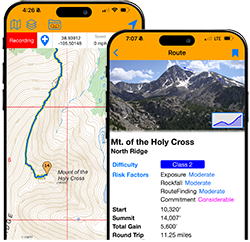
- Install the 14ers app. The route description is good, but there are a couple of spots where reality didn't match my expectations when I was actually there. The gps function on the map helps tremendously.

- The talus field on the traverse from Browns is longer than it appears from the description and pictures. Give yourself plenty of time.

- You're going to be alone in the wilderness for most of the day. Consider ahead of time how you are going to handle various situations. What if you get lost? Do you have map and compass and know how to use them? Satellite communication capability? What if one (or more) of you are hurt and need emergency evacuation? No one is going to wander by on this route so you need to make sure you are completely self-sufficient.

Have fun!
Fast Jimm
Posts: 51
Joined: 3/11/2010
Trip Reports (0)
 

Re: 14er trip for 800' dwellers

Post by Fast Jimm »

The following is related only to altitude acclimitization. When I was living in Lincoln, Nebraska (1175 ft elevation) and right at 39 years old, I was able to do the following 4 hikes in a row, starting on day 1 (after a late arrival and overnight stay in Colorado).

  • Peak 1, Frisco (12800 elevation)
  • Peak 1 + Peak 2 (tenmile), Frisco (12933 elevation)
  • Mt. of the Holy Cross, Std Route
  • Yale East Ridge
While I was climbing a big 14er on day 3 with about 5500 feet of elevation gain, I managed to stay quite comfortable during the entire 4-day trip. It was exhausting, of course, but I didn't have any altitude sickness, and I think these tips helped me acclimate quickly:

I arrived in Colorado late the night prior to hiking and stayed in Frisco so I had a nights sleep at a more modest 9000 feet. This is a best practice in any case since you want to start EARLY both for lightning/thunderstorm safety and to hike in cooler conditions. The Dillon/Silverthorne/Frisco area is ideal in this way, allowing you to hike high during the day and sleep/rest (relatively) low in the evening. Most people can handle 8000 feet without issues.

I took a couple Advil each of the first couple days to help prevent any early symptoms of Acute mountain sickness

I was in very good shape, had been preparing with lots of cardio including some treadmill inclines with packs

I hydrated heavily both during the hikes and after, think 5-6 liters of water or diluted gatorade during the hikes and more the rest of the day. Eat enough easily digestible foods to avoid becoming hypocaloric, but don't overdo it!

This gradual buildup of max altitude, going no higher than just under 13k on both day 1 and 2, may not be practical for your trip, but by day 3 I felt very strong. Day 1 & 2 for me was about 3700 and 4300 feet of elevation gain but you may have decent results climbing a 14er on day two that doesn't require quite as much elevation gain.

Of course, people react differently and while I felt good and things went predictably, I would have had to turn around if this hadn't been the case. Peaks and routes with relatively linear ascend/descend profiles- vs roller coaster ridges and deep climbouts- are easy to turn back on and start losing altitude quickly if needed. You do NOT want to have to reclimb 500-1000 feet to get back to the trailhead and lower altitudes if you're already experiencing symptoms of altitude sickness. I think these strategies will maximize your chances of success.
Last edited by Fast Jimm on Sat Sep 06, 2025 7:42 pm, edited 1 time in total.
MajesticCO
Posts: 8
Joined: 8/26/2025
Trip Reports (0)
 

Re: 14er trip for 800' dwellers

Post by MajesticCO »

Thanks for your help. I had originally planned on spending the first night in CO in Leadville as its at 10k, and would likely give us a good idea if one of us was not going to be able to stave off altitude sickness prior to the mountain. This is still (probably) what I'll do, but I appreciate the idea of diluted Gatorade! I can definitely see that being pivotal so I'll do that.
Fast Jimm
Posts: 51
Joined: 3/11/2010
Trip Reports (0)
 

Re: 14er trip for 800' dwellers

Post by Fast Jimm »

I appreciate your response as well. I think Leadville is a tough stay early in a trip as you then have to purposely find a trail head or excursion to go below 10k feet and are stuck sleeping high, but I think we're all interested in how your trip goes! Every report is helpful information for the next wave of hikers.
MajesticCO
Posts: 8
Joined: 8/26/2025
Trip Reports (0)
 

Re: 14er trip for 800' dwellers

Post by MajesticCO »

I think you're probably right. We'll be sleeping low the final 2 nights, so there's really no reason to try to acclimate at 10k. Looking at Buena Vista as an 8k option
User avatar
mtree
Posts: 1718
Joined: 6/16/2010
Trip Reports (0)
 

Re: 14er trip for 800' dwellers

Post by mtree »

You're not going to acclimate so doesn't really matter where you sleep as long as you get GOOD sleep.

I just took 2 hikers up in mid August. They were from the east coast. They had 2 solid days of rest and "acclimation" at 8k. Guess what, one was fine and the other got pretty good altitude sickness. We had to turn around about 13k. One symptom he had which you should be aware of is confusion to the point of delusion. Basically if someone is not acting typical, with mood swings and bizarre behavior. You'll know it if you see it... unless its you. He recovered after going lower, eating and hydrating. You just never know until you're up there and actually exerting yourself.

I'm not big on Gatorade. Too much sugar and minimal electrolytes. I prefer Body Armor. You can also add electrolytes to your water in powder or pill form. Just take it slow and see how it goes. Enjoy!
- I didn't say it was your fault. I said I was blaming you.
astranko
Posts: 167
Joined: 7/27/2020
14ers: 46  20 
13ers: 270 8
Trip Reports (4)
 

Re: 14er trip for 800' dwellers

Post by astranko »

mtree wrote: ↑Thu Sep 04, 2025 11:11 am You're not going to acclimate so doesn't really matter where you sleep as long as you get GOOD sleep.
You post this "advice" in every thread and again I have to point out that NO reputable source agrees with this statement. It is, by every metric, false.

Acclimatization happens through a series of processes, both fast (hours to days) and slow (weeks). Staging any trip such that you move upwards as slowly as your itinerary will allow will reduce your risks of altitude sickness and allow those processes to happen more completely.

Here's a series of recommendations from the CDC: https://www.cdc.gov/yellow-book/hcp/env ... lness.html
Save Yahoo Mountain
Bill G
Posts: 190
Joined: 7/28/2004
Trip Reports (0)
 

Re: 14er trip for 800' dwellers

Post by Bill G »

The vast majority of 14er climbers live on the front range, roughly 5280'. They do the 14ers as day trips. No stopping at 8000' or 10000' to prepare. There's a small percentage that have problems. If you live in Leadville, you might have a slight advantage. Otherwise, don't overthink this.
pw
Posts: 568
Joined: 7/10/2006
14ers: 45 
13ers: 70
Trip Reports (1)
 

Re: 14er trip for 800' dwellers

Post by pw »

I asked one of those AI things about acclimatizing to higher altitude. Here is what it said. Based on this it is true that very little acclimatization takes place over the first 24 hours.

When a person ascends from low to high altitude, the body begins adapting almost immediately to the reduced oxygen availability. Here's how red blood cell production ramps up:

⏱ Timeline of Red Blood Cell Response to High Altitude
Within Hours to 1 Day: The body detects lower oxygen levels (hypoxia), triggering the kidneys to release erythropoietin (EPO)—a hormone that stimulates red blood cell production.

2–3 Days: EPO levels peak, initiating the bone marrow to increase red blood cell synthesis. However, new red blood cells take time to mature.

5–10 Days: Early signs of increased red blood cell count begin to appear. Oxygen-carrying capacity starts improving.

2–3 Weeks: Significant rise in red blood cell mass and hemoglobin concentration. This is when most people feel noticeably better acclimatized.

4+ Weeks: Full acclimatization for most healthy individuals. The body has adjusted its oxygen transport system, including increased red blood cells, hemoglobin, and 2,3-BPG levels (which help release oxygen to tissues).
http://www.flickr.com/photos/pwahl/" onclick="window.open(this.href);return false;
User avatar
nyker
Posts: 3567
Joined: 12/5/2007
14ers: 58 
13ers: 25
Trip Reports (69)
 

Re: 14er trip for 800' dwellers

Post by nyker »

Bill G wrote: ↑Thu Sep 04, 2025 2:14 pm The vast majority of 14er climbers live on the front range, roughly 5280'. They do the 14ers as day trips. No stopping at 8000' or 10000' to prepare. There's a small percentage that have problems. If you live in Leadville, you might have a slight advantage. Otherwise, don't overthink this.
The OP though is from sea level basically per the title, so it pays to prepare to be up higher for a body not used to the altitude. Anyone living at 5000+ft is somewhat pre-acclimatized especially if they can get up above 10,000ft once a month or so.

* The advice in above posts about hydrating, going slow etc is all sound
* Good sleep IS important for feeling good on a mountain and success. Coming for someone living at sea level I can attest to this many times over. I have a much higher fail % on peaks where I didn't sleep or sleep well the two nights before a climb and much higher % success rate when I had good sleep.
* Having a good aerobic base is important and having the ability to recover faster is very beneficial after exerting yourself at elevation.
* Watch your diet also, maybe this varies by individual, but have found with me that I do better with carb-heavy diet while staying higher up vs meat/fat/dairy, of course many paleo/atkins anti-carb people will argue with me.
* Don't start out to fast either and go at a measured pace to start
* While some refute this, in my experience, benefits from acclimatization, even a few days at altitude lasts for weeks after you leave, making the next trip easier on your body (assuming that trip is within a month or so). The first trip each season up high is always the hardest for me but if I can do another one soon after I always have climbed better and faster.
I found exercising at altitude makes acclimatization quicker or more effective for climbs, vs just "being" at altitude at least for short stays.
User avatar
mtree
Posts: 1718
Joined: 6/16/2010
Trip Reports (0)
 

Re: 14er trip for 800' dwellers

Post by mtree »

You will not acclimate to high altitude in a few days. Period. Acclimate - biochemical and physiological changes in your body at a cellular and molecular level. There just isn’t enough time. It takes many days, even weeks to get results and there are many variables involved.

What you CAN do is adapt. First, there’s biophysical adaptation. The ability to both physically and physiologically make adjustments to changing environmental conditions. You won’t see much difference physiologically. But you can adapt physically - and most noteworthy - psychologically. These are the benefits I suggest. It is different than acclimation or biophysical adaptation. I call it physical adaptation. Its far easier to achieve.

Just sleeping overnight at altitude will do absolutely NOTHING to adapt. You’re not engaging your body to cope with any kind of stress. That’s like saying your 4 hour flight pressurized at 8000ft was sufficient. No, it isn’t. You’re sitting there. Hanging out at 8000ft on a couch or slugging beer doesn’t do much either. Kinda like staring at the weight bench expecting to yolk up. Sleeping in your car at the trailhead before the hike to get acclimated? Right. Hey, if the placebo works, take it! Going for a run at 8000ft? Now we’re talking!

My suggestion is different than most. I say get the body to react to altitude stimulation as soon as possible. This includes a short hike above 10k. Maybe a longer one or higher one if you feel good. What’s happening is you’re learning to adapt to your new environment. How to breathe properly without passing out. How to set your cadence. How to adjust your speed. How it feels to have your chest expand like your heart is popping out of your ribs! Dealing with exhaustion, dehydration, and recovery. Extending endurance. THESE are the benefits of strenuous movement at altitude before hiking a 14er. You are physically adapting to your new environment. Its much more efficient and quicker than acclimating. In lieu of this, just go for it. Start slow and take it easy.

I say sleep wherever, but just sleep before a big hike. Preferably 48 hours in advance. It’s the night’s sleep before the night of the hike that really matters. Eat well and hydrate to minimize your body’s unnecessary stress. My mantra to all the newbies and flatlanders I take hiking is physical adaptation. Focus on the things you can control. That’s the key. Physical adaptation. That’s what we should push to newbies asking about acclimatization. Kinda what nyker stated without realizing it.

One more thing on altitude sickness. You can’t predict it. Outside of not climbing that 14er, you can’t really prevent it. If it happens it happens. Just don’t make it worse.
- I didn't say it was your fault. I said I was blaming you.
astranko
Posts: 167
Joined: 7/27/2020
14ers: 46  20 
13ers: 270 8
Trip Reports (4)
 

Re: 14er trip for 800' dwellers

Post by astranko »

pw wrote: ↑Thu Sep 04, 2025 7:45 pm I asked one of those AI things about acclimatizing to higher altitude. Here is what it said. Based on this it is true that very little acclimatization takes place over the first 24 hours.
1. AI summaries aren't really a reliable source of information, especially on complex topics. The one provided, unsurprisingly, misses a lot.
2. EPO stimulation to red blood cell production is not the only process by which acclimatization occurs. For example, your respiration depends and your blood plasma volume decreases slowly over the course of the first 24-72 hours. As I said before, there are a host of processes, both fast and slow, that take place.

Look at this link: https://www.princeton.edu/~oa/safety/altitude.html under the heading Acclimatization and it lists some other changes.
mtree wrote: ↑Fri Sep 05, 2025 9:52 am What you CAN do is adapt.
You're making distinctions that don't exist. I'm not going to argue with you about this. I have argued with you. It wasn't helpful then and it won't be helpful now.

There is a body of work that exists on this topic that is reputable and evidenced based. If you're going to continue to offer advice, I would suggest engaging with it.
Save Yahoo Mountain